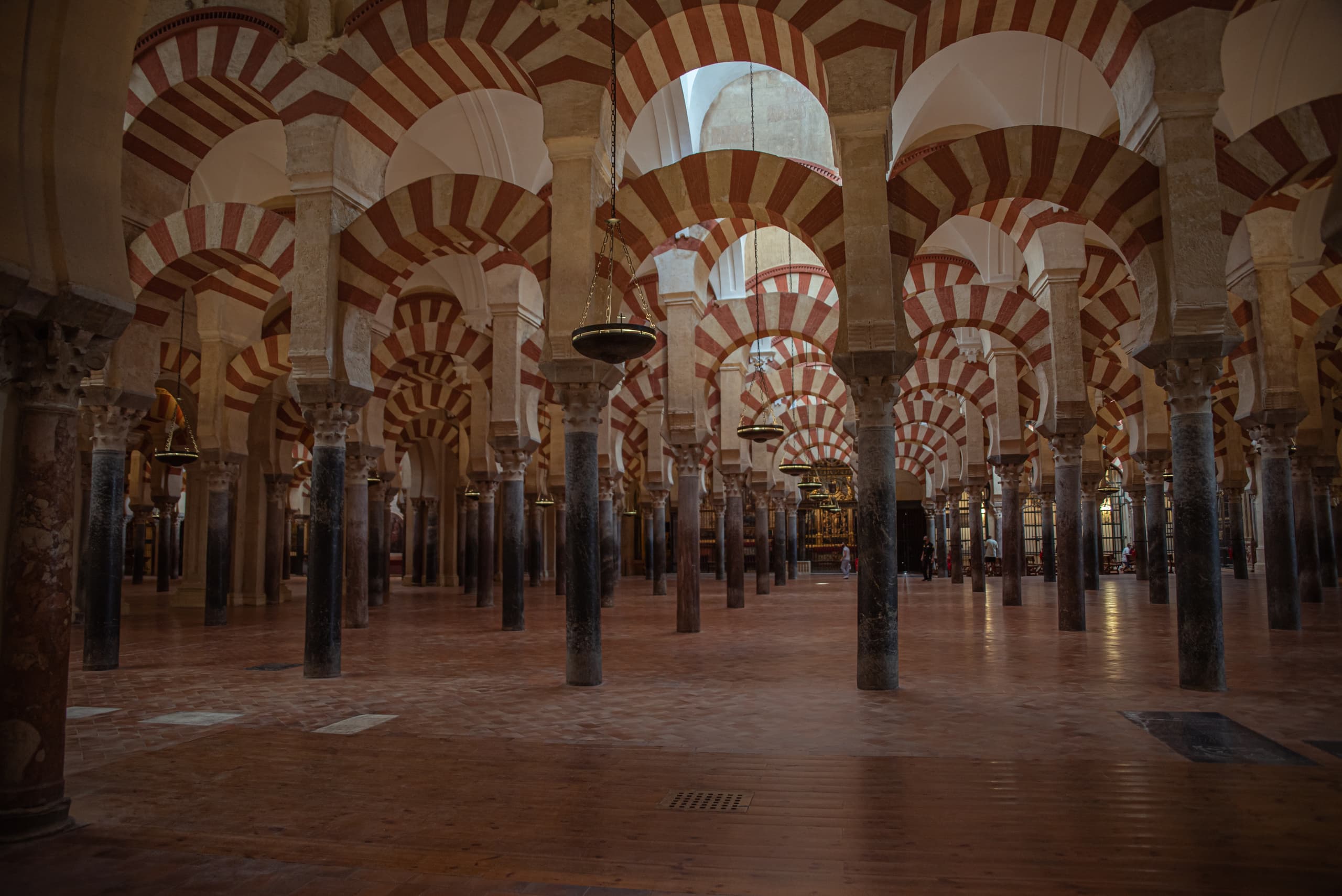
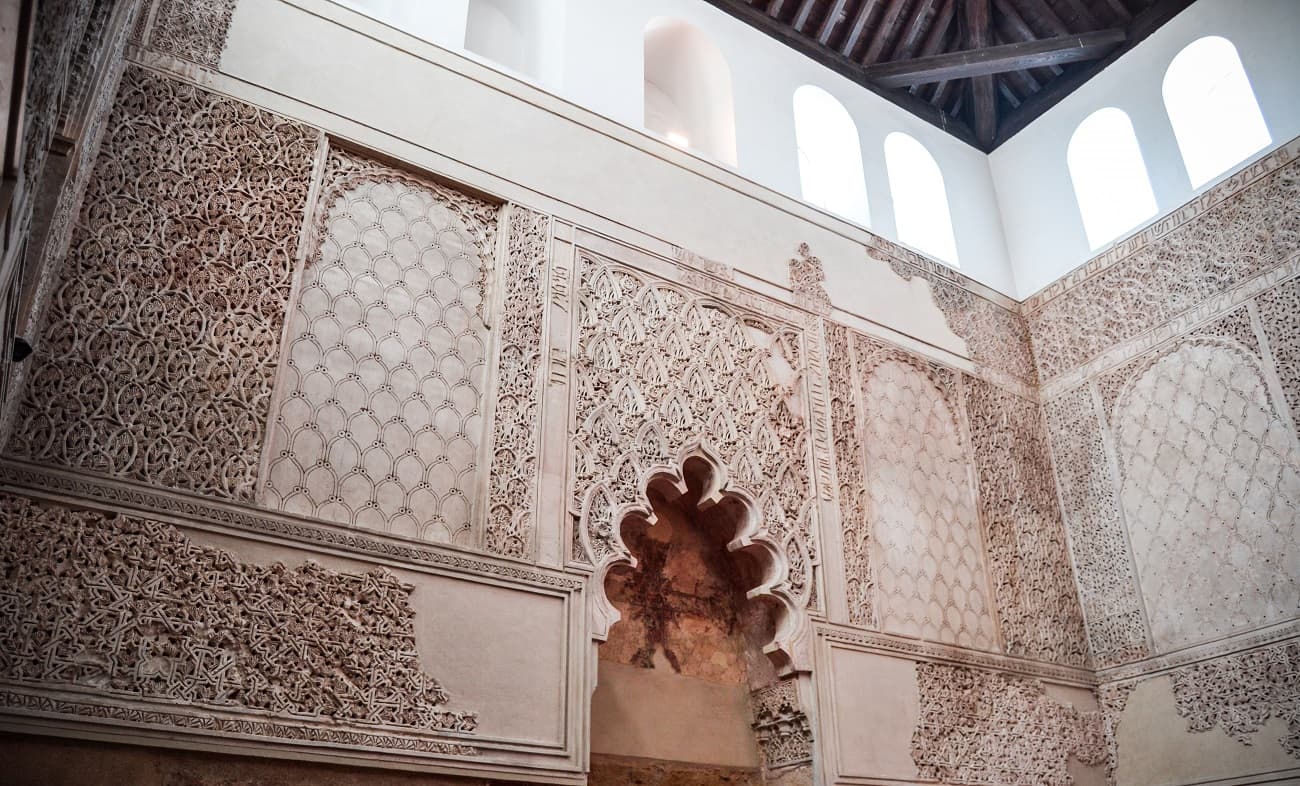
On this guided tour of the Mosque-Cathedral with tickets included we explore the monument understanding its history through phases and expansions, from the first Mosque to the great caliphal development. During the tour you'll see key points such as the remains of the Visigothic Basilica of San Vicente, the complete reading of the interior stage by stage, and the most emblematic area of the complex, with the Mihrab and the dome that covers the maqsura, considered one of the most representative works of Umayyad caliphal art.
The visit also covers the change of era after the Christian conquest, so you understand what was transformed and how the cathedral was built within the temple. In this section we walk through spaces such as the Royal Chapel, the Cathedral Transept, the High Altar and the Choir Stalls, closing the itinerary with a complete and orderly view of everything you've seen.
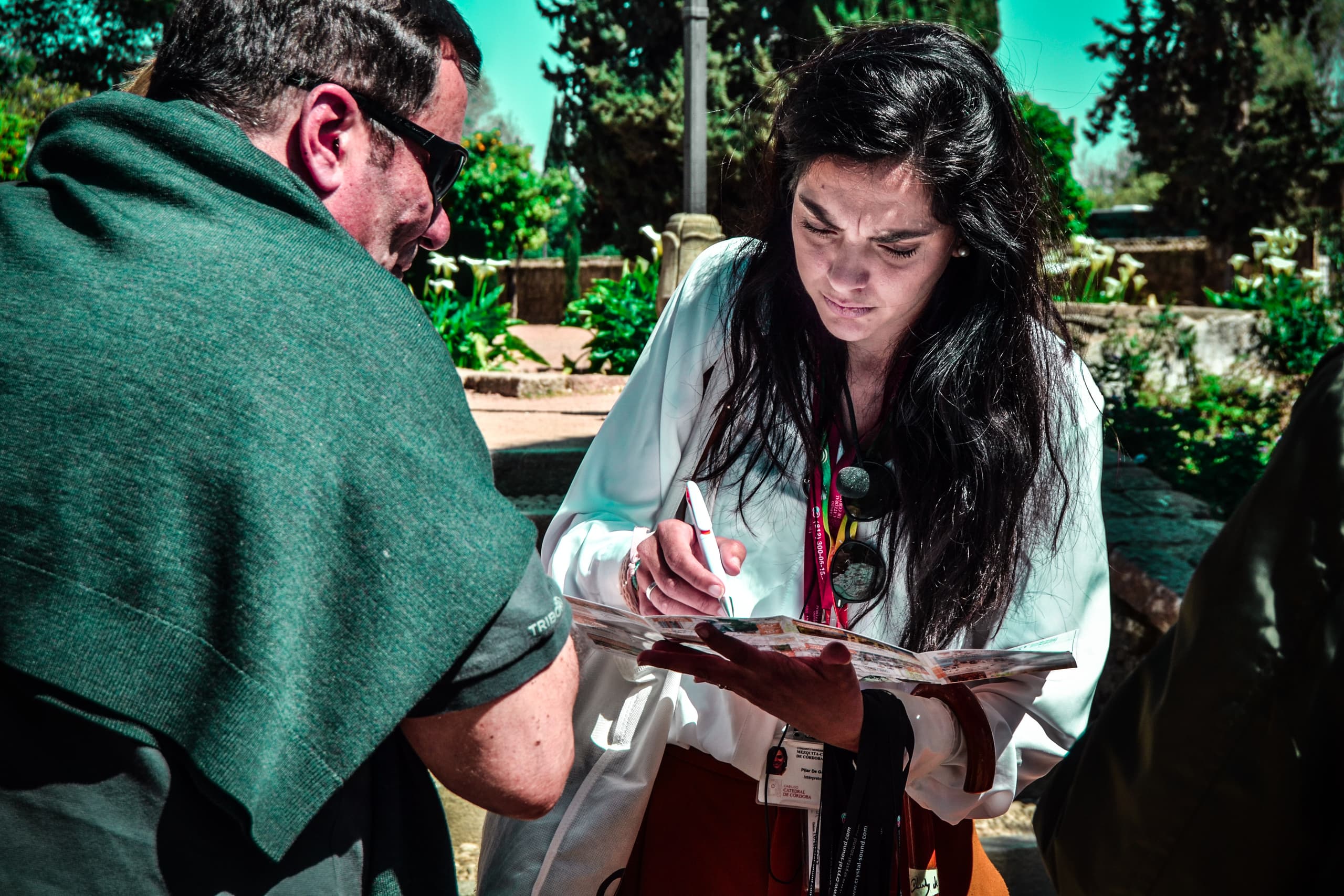
The visit begins at the Door of Forgiveness, where the guide introduces themselves and explains how the tour will unfold, with an approximate duration of 1 hour and 15 minutes. The start takes place in the Patio de los Naranjos, setting the historical context from 711, the move to the independent emirate with Abd al-Rahman I in 756 and the leap to the caliphate with Abd al-Rahman III in 929, linking it to caliphal Córdoba and Medina Azahara. It is also made clear that the climb up the Bell Tower is a separate visit and that it still houses the old minaret, standing 74 metres tall.
Once inside, the guide presents the Mosque as a building best understood through its construction phases, eventually reaching some 22,400 m², entering through the founding phase of Abd al-Rahman I, 786–788. In this section the archaeological remains of the late antique complex are explained, along with the reference to the earlier basilica and the mosaics visible at 2.5 metres, as well as the orientation towards the qibla wall, the original function of the courtyard as a source of light, and the key architectural features, such as the double arcade with a semicircular upper arch and horseshoe arch, and the two-tone pattern of voussoirs and brick.
The tour continues with the expansion of Abd al-Rahman II, 833–848, highlighting the building's growth towards the south. From there we move into the expansion of Al-Hakam II, 962–966, the most artistic section of the complex, where the domes and the axis leading to the Mihrab are explained. At this point the work with Byzantine tesserae associated with Emperor Nikephoros Phokas is detailed, with a chromatic richness reaching 19 colours and an abundance of gold, linking to elements such as the Treasury Door and the sabat, the caliph's access passageway from the palace area.
In parallel, the guide brings in the Christian reading from 1236 onwards, with the arrival of Ferdinand III, explaining the Christianisation and later development that leads up to the major intervention that gives rise to the cathedral inside. In the final stretch we pass through the area of the Cathedral Treasury and the Chapel of Cardinal Salazar, where mention is made of the Monstrance created by Enrique de Arfe around 1500 and its use during Corpus Christi. There is also a reference to the stonemason's marks studied by Manuel Ocaña, visible in a plaster display case.
The last Islamic phase covered is the expansion of Almanzor, 991–994, explained as growth towards the east and a visible change in execution compared to earlier phases. The visit concludes at the Cathedral Transept, 1523–1603, commissioned in the time of Charles V and developed in different phases by the Hernán Ruiz family, with a later Baroque completion. The itinerary finishes with the High Altarpiece, 1618–1646 and the 18th-century Choir Stalls by Pedro Duque Cornejo, ending the tour and exiting through the Door of Santa Catalina.