This is the planned route for the guided tour of the Mosque and Alcázar of Córdoba, with the approximate time spent at each monument. The usual order is to start at the Mosque-Cathedral and continue on to the Alcázar of the Christian Monarchs, although this may be reversed depending on ticket availability and opening hours. During the route, the historical evolution of Córdoba is explained from Corduba Colonia Patricia, through the Muslim period and the Christian period, so you can understand the role of both sites in each era.
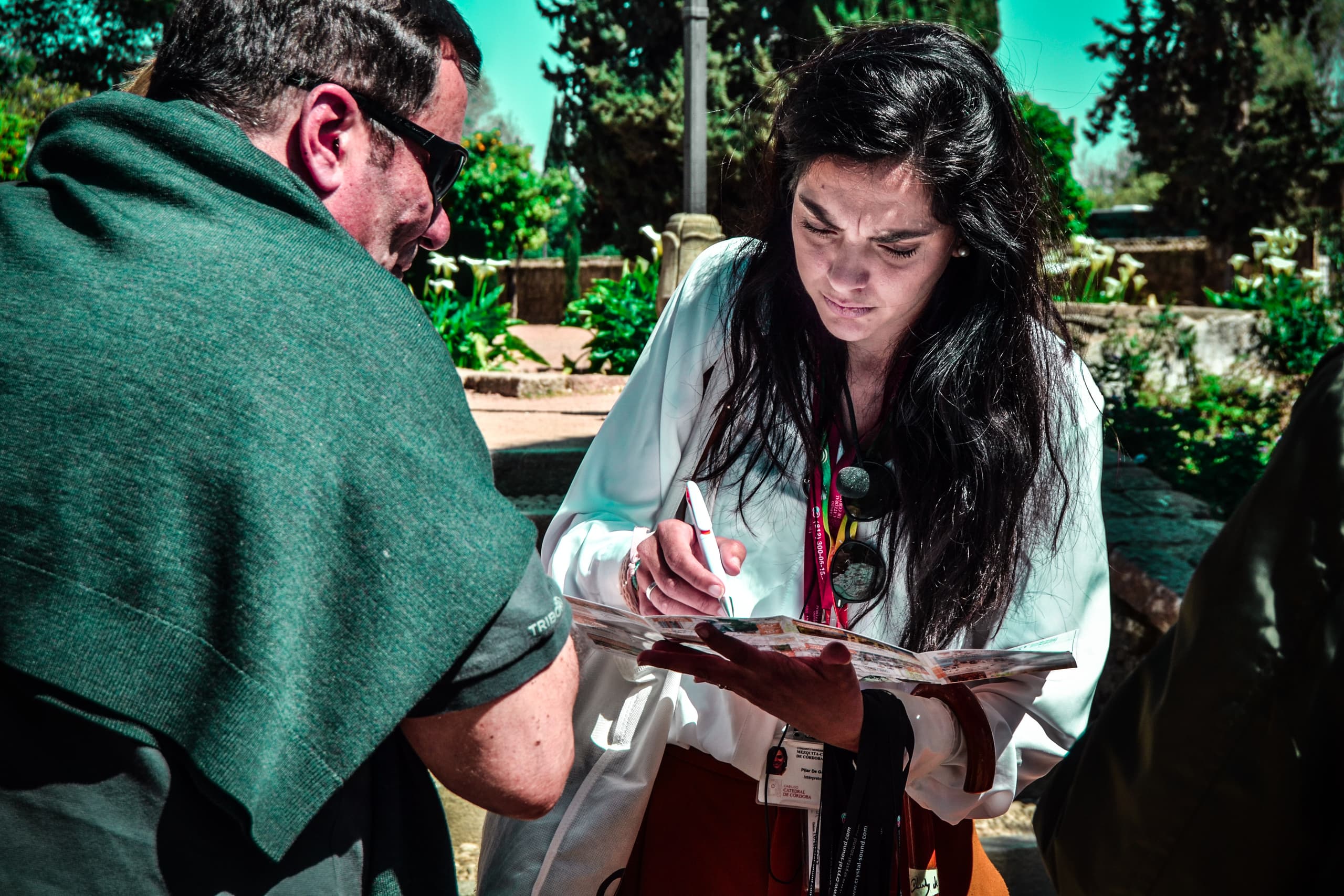
The tour lasts approximately 2 hours and 30 minutes and is organised in two parts. The usual order is to start at the Mosque-Cathedral of Córdoba and continue on to the Alcázar of the Christian Monarchs, but it may be reversed depending on ticket availability and each monument's opening hours. The starting point is the Door of Forgiveness of the Mosque-Cathedral, opposite Sabor a España, where you'll recognise the guide by their orange umbrella.
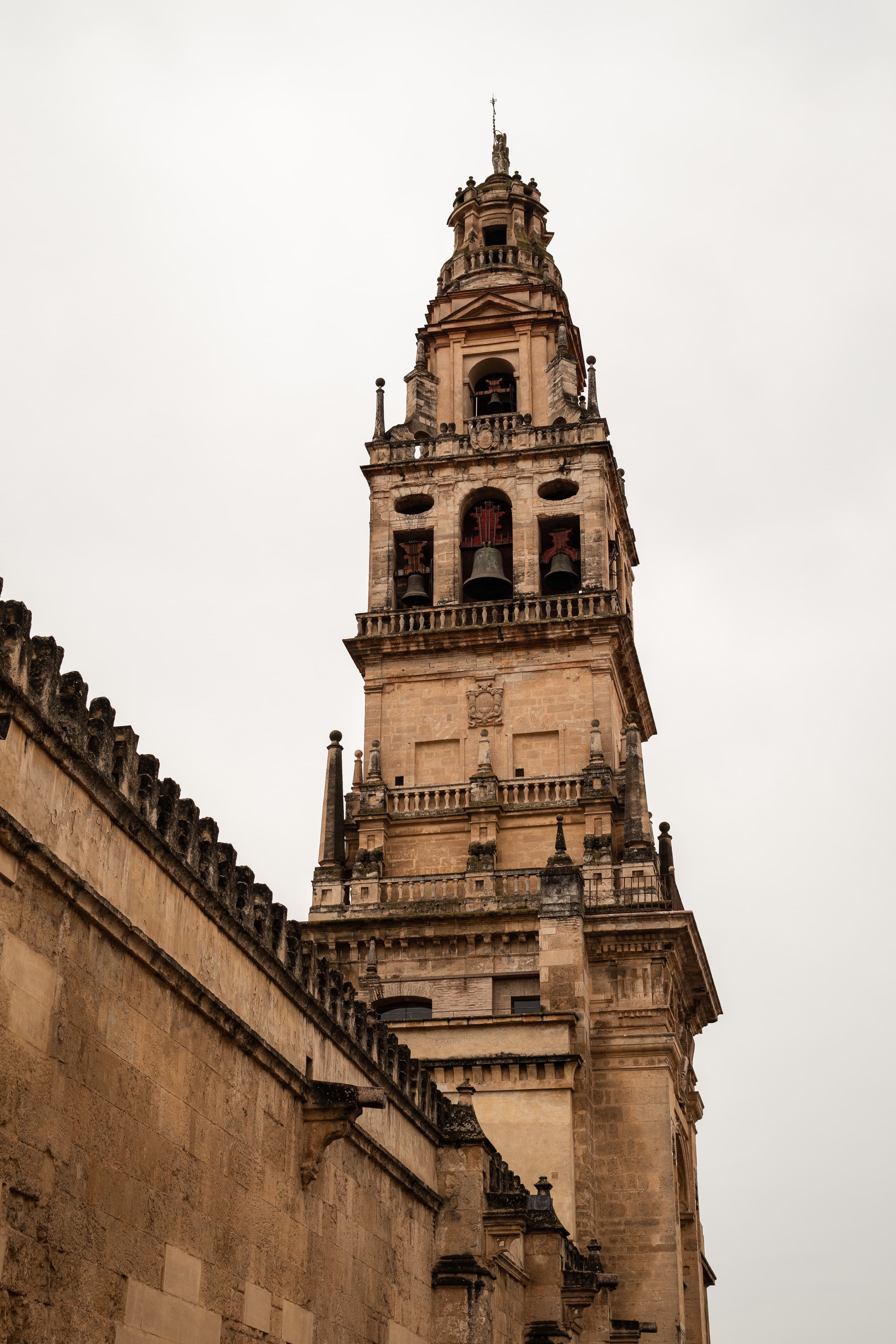
The first part takes place at the Mosque-Cathedral over about 1 hour and 15 minutes. It begins in the Patio de los Naranjos with an introduction to the Islamic period from 711, the emirate period and the proclamation of the caliphate in 929, linking this context to the monument's evolution and its relationship with Medina Azahara. Here the historic minaret is also explained, along with its connection to the bell tower, noting that a visit up the tower is a separate visit. The building is framed as a complex built in phases, reaching 22,400 m², so visitors understand why the Mosque brings together different eras and styles in the same space.
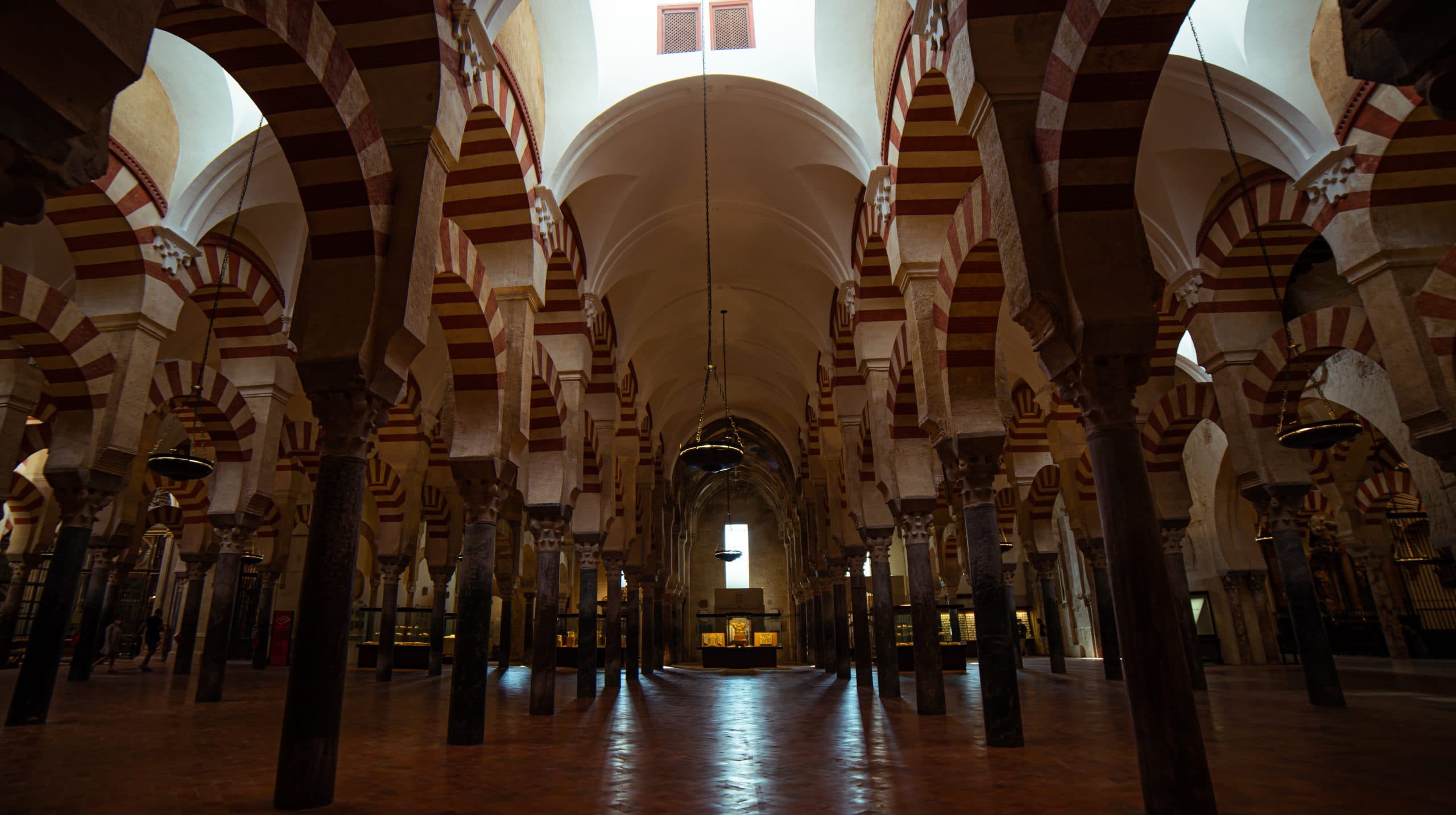
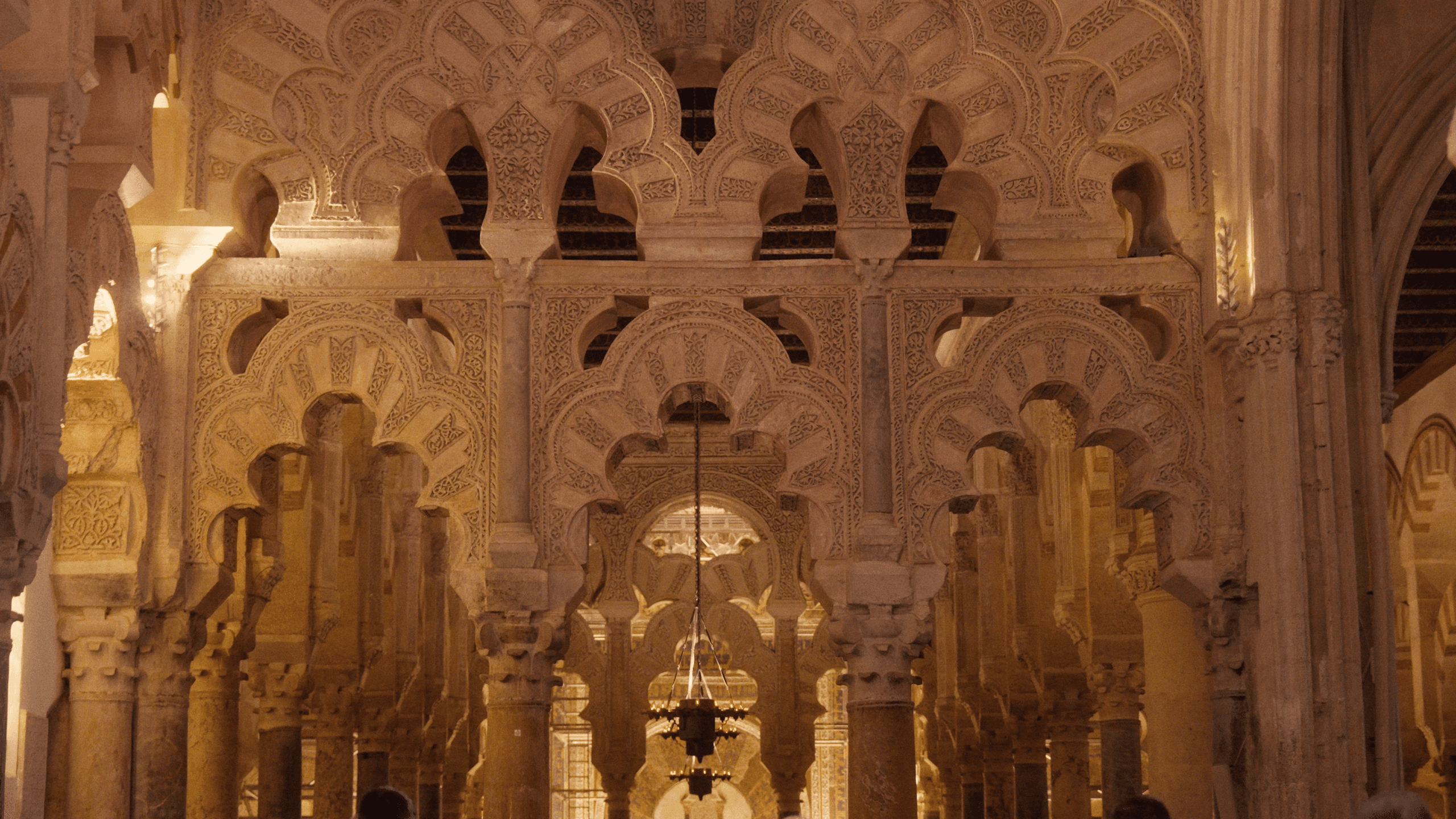
Next, we enter through the founding mosque of Abd al-Rahman I, dated between 786 and 788, and the layering of eras is explained through the archaeological remains linked to the basilica of San Vicente Mártir and the 20th-century excavations. From there, the tour moves through the interior to explain the orientation of prayer, the courtyard's role as a source of light, and the architectural elements that define the space, such as the double-arcade construction and the characteristic two-tone design.
Next comes the expansion of Abd al-Rahman II, between 833 and 848, identifying the change in section and the extension towards the south. At this point we explain the growth of Córdoba and the expansion of the building, along with the courtly context and social changes that accompany this phase.
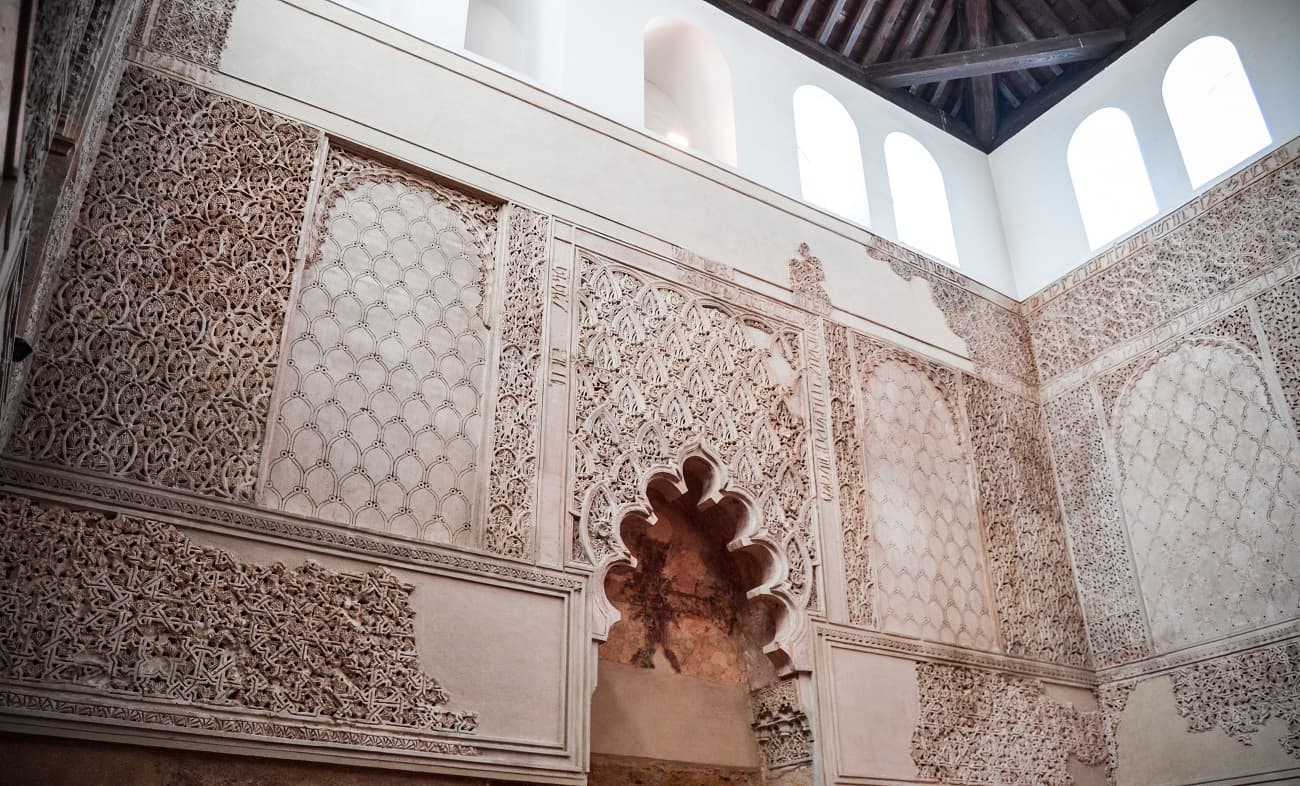
The tour continues with the expansion of Al-Hakam II, between 962 and 966, focused on the skylight dome and the peak of artistic splendour in the 10th century. This links to the Christian conquest of 1236, the Christianisation of the space and the first organisation of the cathedral, explaining why this area played a key role in Christian worship until the 16th century. We look closely at the passage towards the qibla wall and the mihrab, with an explanation of the mosaic made with tesserae sent from the Byzantine world, the colours, the symbolism of light and how Islamic prayer worked. This section also mentions spaces such as the Treasury Door and the sabat, connecting political and religious power.
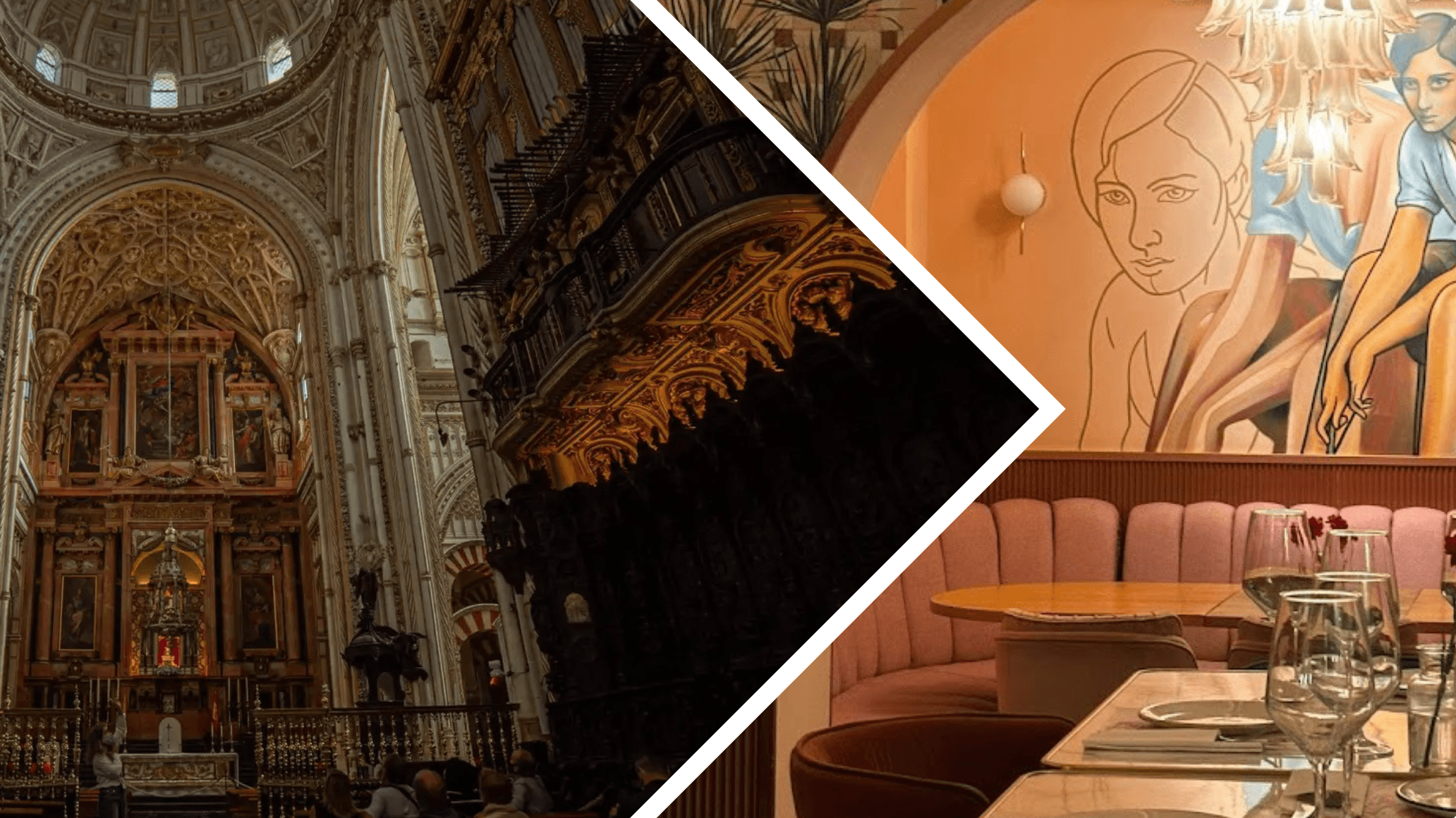
In the final part inside the monument, we pass through the era of Almanzor, between 991 and 994, explaining the expansion towards the east, the differences in quality and the political context at the end of the caliphate with Hisham II, the rise of Almanzor and the later crisis that led to the fitna. From there we reach the cathedral transept, built between 1523 and 1603, where we explain how the new cathedral was inserted within the old mosque, the construction phases and the architects involved, as well as the impact of this intervention on the original building. This section is rounded off with references to the high altarpiece and the choir stalls, highlighting their craftsmanship, materials and iconographic programme, before heading to the exit to link up with the second part of the tour.
The second part of the itinerary takes place at the Alcázar of the Christian Monarchs over approximately 1 hour, with special attention to its gardens. The tour places the building as a seat of power in Córdoba since Roman times, using pieces such as the 3rd-century Roman sarcophagus to introduce the context of Colonia Patricia Corduba and the city's status. From there, we explain the evolution of the site, from its Visigothic reuse, the great expansion of the Andalusi alcázar, and the changes after the Christian conquest, including the role of Ferdinand III, the drive of Alfonso X and the fortification carried out under Alfonso XI. We also cover the era of the Catholic Monarchs in Córdoba and the building's later transformation when it became the seat of the Inquisition, so you understand why today's Alcázar combines functions and traces from different periods.
The visit usually ends at the Alcázar of the Christian Monarchs, although if the order is reversed due to ticket availability, the route may finish at the Mosque-Cathedral of Córdoba instead.