
Guided tour of the Mosque-Cathedral
1 h 15 min
Black Friday: 10% off with code BLACKFRIDAY26, until 10 December. Applied automatically at checkout. Not valid on free tours or private tours.
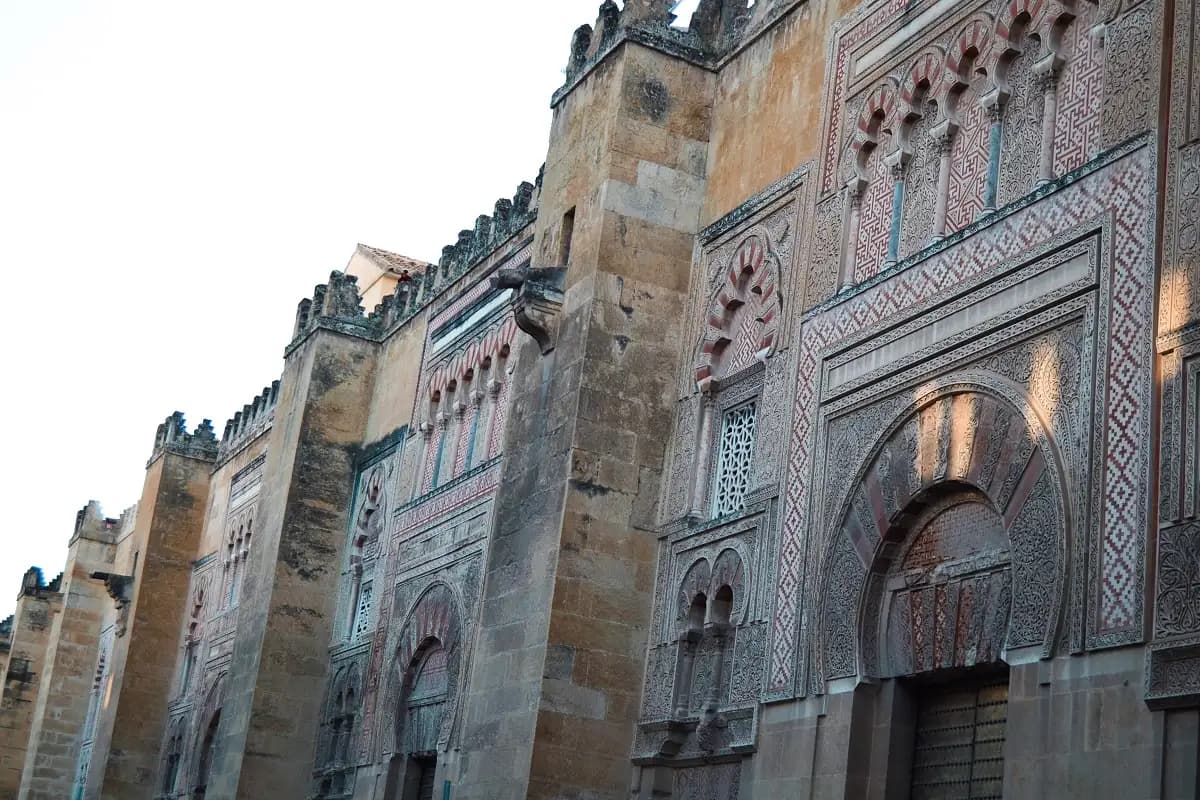
The Mosque-Cathedral of Córdoba brings together, within the same building, several areas belonging to very different periods and functions. The hypostyle hall preserves the structure of the original Friday mosque with its forest of columns and two-tone arches. The maqsura and the mihrab hold the most refined caliphal part of the complex. The Main Chapel, the Transept and the Choir add the great cathedral-era intervention. And the Patio de los Naranjos, the Gate of Forgiveness and the Bell Tower complete the outdoor tour.
Covering more than 22,000 square metres, 174 metres long and 128 metres wide, it is the third largest mosque in the world and a World Heritage Site since 1984. Below you can see how the monument is laid out and what you'll find in each of its main areas.
The origin of the temple goes back to the Visigothic Basilica of San Vicente, on whose remains the first mosque was built in 785 at the initiative of Abd al-Rahman I.
Tours with an official guide
1 h 15 min
2 h 30 min
2 h 30 min
3 h 30 min
On one hand there is the Islamic part, with the prayer hall and its successive extensions that grew from Abd al-Rahman I in 785 to Almanzor in 987. On the other, the Christian part, with the Main Chapel and the Choir built within the prayer hall itself starting in 1523. Add to that the Patio de los Naranjos as the former ablutions area and the Bell Tower, which holds within it the remains of the 10th-century minaret.
This layering of periods is what makes the monument unique. It isn't a mosque and a cathedral kept apart, but a single space where both readings coexist. The guided tour helps you understand how each part was built and why the final result is unlike any other building in the world.
01Area 01
The interior of the Mosque is understood through its structure: a prayer hall arranged in aisles with a double arcade resting on columns. Around 850 columns of jasper, onyx, marble, granite and porphyry are recorded, and Almanzor's extension brought the total to nineteen aisles from north to south with close to 600 arches.
The double arcade was a structural solution to gain height: a horseshoe arch below and a semicircular arch above. The original Visigothic columns were too low for the builders' needs, so they added piers without tearing down the earlier arches. For the alternating colour, red brick and yellow limestone voussoirs were used, creating the unique look of the forest of columns.
In the foundational mosque of Abd al-Rahman I (785), all the columns and capitals were reused from Roman and Visigothic buildings. Abd al-Rahman II (833-852) extended the arcades by eight more bays. Al-Hakam II (961) extended the hall 45 metres to the south. And Almanzor (987) extended the building eight aisles to the east, leaving the mihrab off-centre. In this last section the arches no longer combine brick and stone, but are made entirely of limestone painted red where needed: recent research using 3D laser scanning has confirmed that the average column diameter is 44 centimetres and the spacing between them is 315 centimetres, figures that differ from those found in earlier publications.
A fact the guide usually points out: in the Almanzor area the arches no longer combine brick and stone. They are made entirely of limestone, painted red where appropriate to keep the two-coloured look of the earlier phases.
 02
Area 02
The mihrab sits within the maqsura space, at the centre of the qibla wall. This section is linked to the extension by Al-Hakam II (after the year 965) and was the first mihrab to lead into a small chamber rather than simply housing a niche in the wall: a horseshoe-arch entrance to an octagonal chamber covered by a shell-shaped dome.
This entire area is decorated with Byzantine mosaics on a gold and bronze background. The craftsmen came from Constantinople, sent by Emperor Nicephorus II Phocas between 963 and 969, using nineteen colours and glass-paste tesserae coated with a thin layer of gold. The whole scheme recreates the Celestial Garden.
The maqsura is crowned with three ribbed domes, the central one reaching 15.40 metres in height, with interlaced polylobed arches that appear nowhere else in the building.
 03
Area 03
This is the most recognizable Christian part of the tour. The Main Chapel, Transept and Choir form the large central block added during the cathedral period. Work began in 1523 at the proposal of Bishop Alonso Manrique and wasn't completed until 1607, passing through the hands of architects Hernán Ruiz I, Hernán Ruiz II and Juan de Ochoa.
The main altarpiece, in Mannerist style, was designed by Alonso Matías starting in 1618. Beneath the dome of the transept lies the tomb of Bishop Leopoldo de Austria, uncle of Charles V and the chief driving force behind the cathedral works.
The choir holds a set of stalls carved by Seville sculptor Pedro Duque Cornejo between 1748 and 1757 from mahogany imported from Cuba: 106 seats assembled without a single nail. Duque Cornejo devoted the last nine years of his life to this work and died two weeks before its unveiling.
 04
Area 04
The Patio de los Naranjos is the complex's former ablutions courtyard, an enclosed space 130 metres long by 50 metres wide, surrounded by porticoed galleries with six outer gates. It was built by Emir Hisham I in the 8th century and expanded during the mosque's successive building phases.
The Muslim courtyard gave way to the Christian courtyard in works carried out under Bishop Francisco de Reynoso (1597-1601), who arranged the rows of orange trees as a visual continuation of the columns in the prayer hall. Beneath the orange trees lies a large cistern that supplied water for the ablutions.
05Area 05
The Gate of Forgiveness is the best-known main entrance to the Patio de los Naranjos. It was completed in March 1377 by order of Henry II of Castile, who covered the entire cost of the work.
It is a large gate measuring 9.45 metres high by 1.93 metres wide, made of pine wood covered with bronze sheets decorated with interlacing and Kufic inscriptions, with two pointed arches framing a space topped by a Baroque dome. In the spandrels of the outer arch is the coat of arms of John I, which includes both Castile and Portugal.
Architect Sebastián Vidal renovated it in 1650 after the new bell tower was built.
 06
Area 06
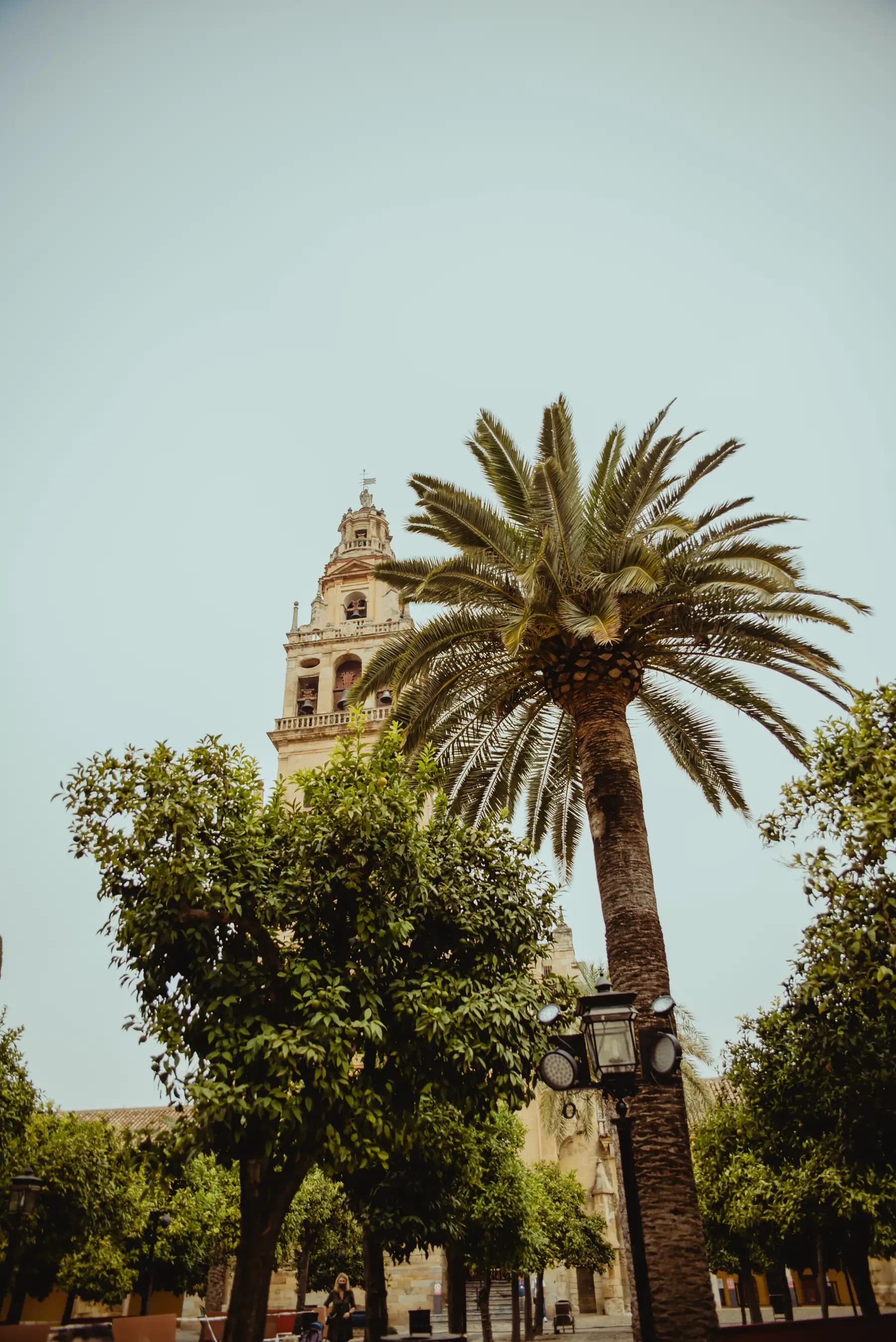
Today's tower holds the complex's past within it: from the Muslim minaret to the Christian bell tower. Records show a minaret raised by Abd al-Rahman III in 951-952, over 40 metres tall, today embedded within the Christian tower.
The tower admired today was built between 1593 and 1617 by Hernán Ruiz III around the remains of the minaret, following an earthquake in 1589. It rises 54 metres, equivalent to a 16-storey building, making it Córdoba's tallest structure.
Later, Juan Sequero de Matilla added the clock section, and in 1664 Gaspar de la Peña placed a new dome at the top, topped by the figure of Saint Raphael, guardian of Córdoba, a work by Pedro de la Paz and Bernabé Gómez del Río.
If you can't dedicate a full visit to the whole complex, priority usually goes to the hypostyle hall and the mihrab. This is the most sought-after part and the one that captures the dual Islamic reading that makes the monument unique: the forest of columns with two-tone arches and the caliphal area with its Byzantine mosaics.
Your second choice depends on the kind of visit you're after. If you prefer the Christian side, the Main Chapel and the Choir offer that perspective. If you're more interested in the exterior, the Patio de los Naranjos and the climb up the Bell Tower complete the picture of the complex.
If your time is limited, a useful way to prioritise would be this: the hypostyle hall and the mihrab as the main part; the Main Chapel and the choir if you want to complete it with the cathedral part; the Courtyard of the Orange Trees and the Gate of Forgiveness as the entrance and exit; and the bell tower only if you add the climb.
It depends on the option. With an official guide, the full route takes 1 hour 15 minutes and covers the main areas of the monument without having to decide on the go what to see. On your own, without a guide, people usually spend between 60 and 120 minutes, depending on the pace and the stops you make.
According to the monument's official website, there is a free tourist visiting slot from Monday to Saturday from 8:30 to 9:30. It is an individual, silent visit, with no guided groups, and it may be affected in the event of extraordinary liturgical celebrations.
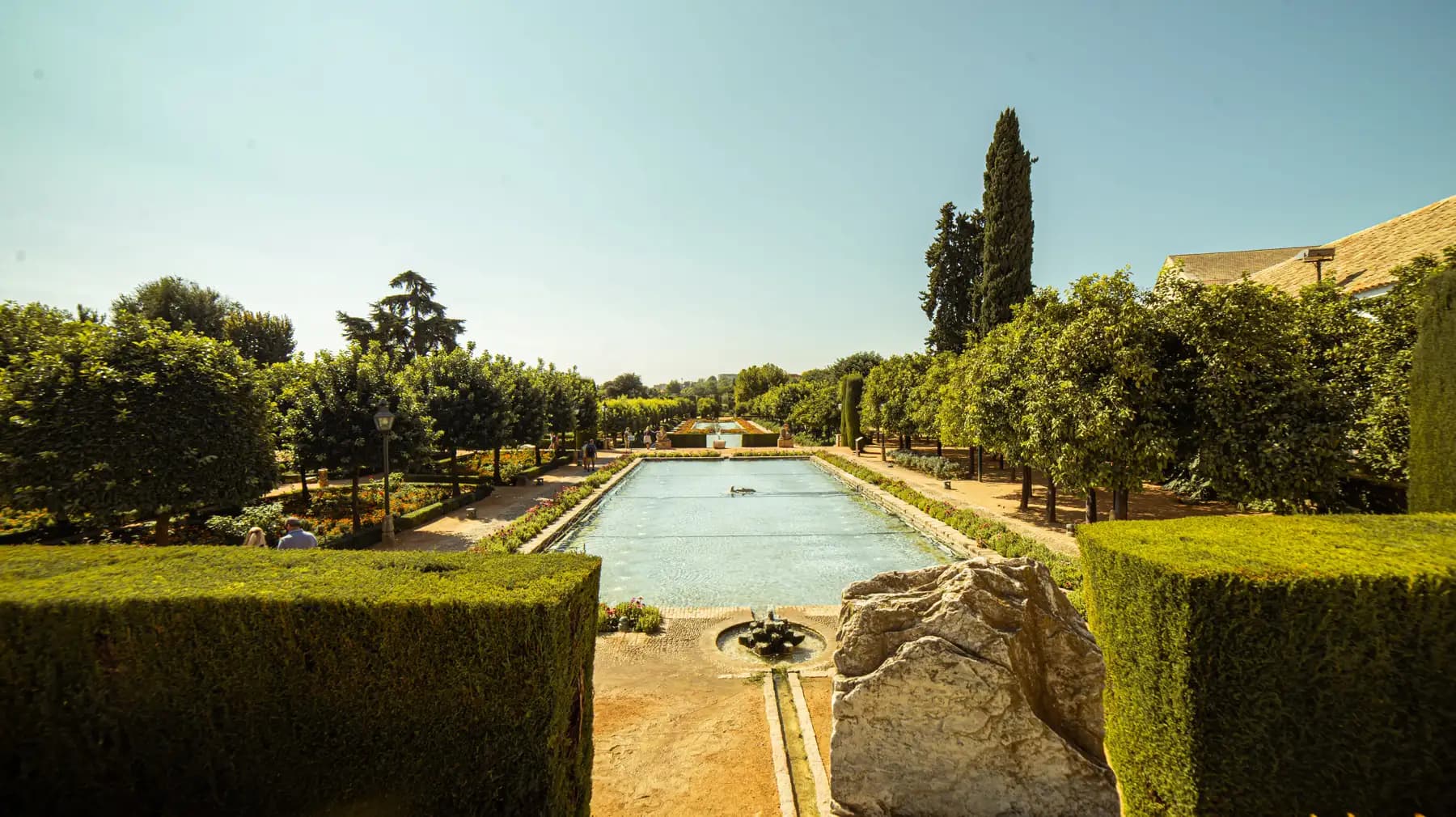
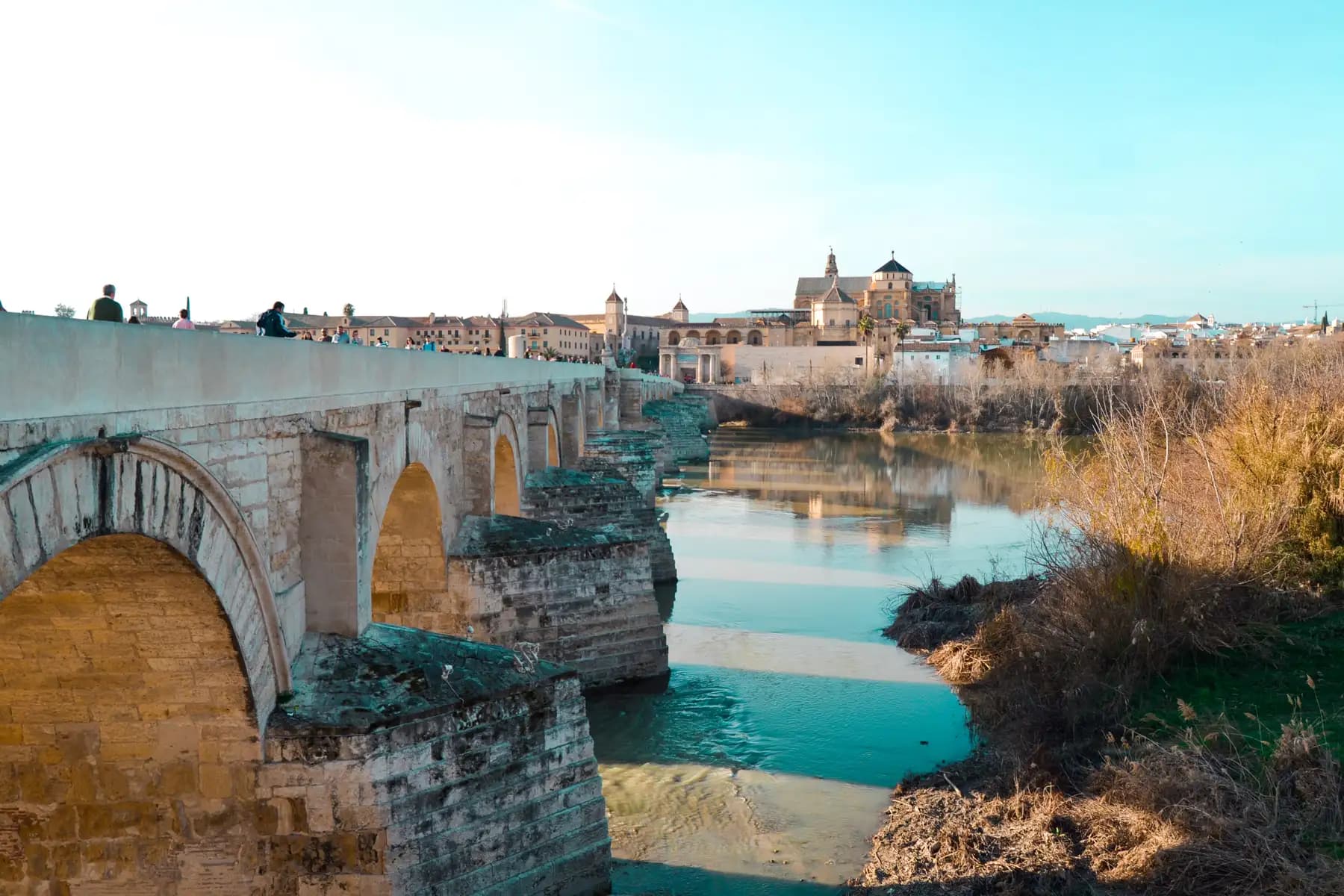
The immediate surroundings of the Mosque-Cathedral bring together several of the most visited spots in Córdoba, a short walk away: the Roman Bridge over the Guadalquivir, the Calahorra Tower on the other side of the bridge, and the Calleja de las Flores, in the heart of the Jewish Quarter.
2 h 30 min
Combine the monument with a guided walk through the Jewish Quarter, very close to the Calleja de las Flores.
3 h 30 min
The most complete option to see the Mosque-Cathedral, the Jewish Quarter and the Alcázar in a single booking.
1 h 15 min
This is the most recommended option if it's your first time or if you want to understand what you're seeing during the tour. The official guide organizes the itinerary through the monument's different phases.
2 h 30 min
A good fit if you want to cover two of Córdoba's main sights in a single booking: the Mosque-Cathedral and the Jewish Quarter, with an official guide.
2 h 30 min
For those who want to dedicate the day to Córdoba's two great monuments in a single booking: the Mosque-Cathedral and the Alcázar of the Christian Monarchs.